

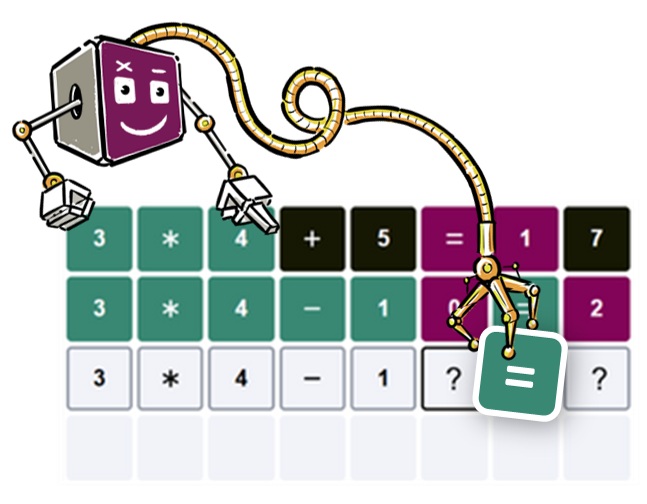
Wordle did something odd to the internet. It made millions of people show up at the same time every day to do one small thing, then stop. No feed, no levels, no reason to stay. You play, you share your grid of squares, you get on with your morning.
The word game itself can wear thin after a few hundred rounds. The habit doesn’t. If you still like the idea of one short puzzle a day but want a different kind of question, these six are worth a slot in your browser bookmarks. Each takes under five minutes, each is free, and each resets daily so you can’t binge it.
1. Connections: for people who like arguing with the puzzle
The New York Times’ second big hit gives you 16 words and asks you to sort them into four groups of four. The groups have a hidden link: things you find in a toolbox, words that follow “fire”, anagrams of planets. You get four mistakes.
What makes it stick is the misdirection. There are always five or six words that could belong to one group, and working out which one is the decoy is the real game. It’s the daily puzzle most likely to make you say “oh, come on” out loud.
Best for: word people who found Wordle too mechanical.
Rogan, Goldberg and Culkin developing a new ‘Home Alone’ movie
2. Worldle: geography with a ruler
Not a typo. Worldle shows you the outline of a country or territory and gives you six guesses. After each wrong answer it tells you how far away you are, in which direction, and how close you were as a percentage.
You don’t need to know every outline. You need to know roughly where things are. Guess France, learn the answer is 2,000 km south-east, and you can reason your way across the Mediterranean. It teaches more geography in a month than you’d expect from a game with one picture.
Best for: anyone who has ever lost an argument about where Moldova is.
WATCH: New scene brings us back for burgers and a release date for Invincible season 5
3. Nerdle: Wordle, but it’s sums
Nerdle swaps letters for digits and symbols. The answer is a valid calculation eight characters long, such as 12+35=47, and you have six tries. Green means right character, right place. Purple means right character, wrong place.
It sounds dry and isn’t. Because the equation has to be true, each guess rules out far more than a word guess does. People who claim to hate maths tend to get hooked on this one, because it’s logic wearing a maths costume.
Best for: the friend who always splits the bill correctly.
Ghostbusters: Afterlife turns five and Logan Kim answers a mystery about the movie
4. Framed: name the film from six stills
Framed shows you a single frame from a movie. Guess wrong and you get another frame, usually a more helpful one, up to six. The first image is often a landscape or a blurry prop. By frame five you’re normally looking at the lead actor.
The fun is in getting it early from something tiny: a colour grade, a costume, a font on a sign. Film nerds will get a lot of ones and twos, and will tell you about it.
Best for: people who watch the credits.
5. A daily higher or lower game: how good is your sense of scale?
This one tests something the others don’t: whether you know how big things are.
The format is simple. You see two things and a number for the first. Is the second one higher or lower? Get it right and the second item becomes the new baseline, and you go again. One miss ends the run.
Plenty of sites offer the endless version. What’s newer is a daily higher or lower game where everyone gets the same set of matchups on the same day. The topic changes daily. One day it’s animal wingspans, another it’s movie ratings or how much a footballer is worth. The round resets at midnight UTC, you get one attempt, and you finish with a score you can send to a group chat.
The single attempt is what makes it work as a daily. In the endless mode you can shrug off a bad guess and restart. Here a careless tap on round three is your score for the day, the same as in Wordle. And because everyone has the same matchups, “I got 14” means something.
It also exposes how patchy most people’s number sense is. You may know that an albatross has a huge wingspan. Do you know whether it beats a pelican’s? Is a ten-year-old superhero film rated higher than the animated one your kids watch on repeat? You’ll be confidently wrong more often than you’d like, which is most of the appeal.
Best for: pub quiz regulars, and anyone who says “that can’t be right” at statistics.
WATCH: Trailer drops for Only Murders in the Building season 6 and man, that cast…
6. The Mini crossword: the one you can finish before the kettle boils
The New York Times Mini is a five-by-five crossword with a timer. It takes most people between thirty seconds and two minutes. That’s the whole thing.
It earns a place because it scratches the crossword itch without asking for twenty minutes. The clues lean on current slang and pop culture more than the full puzzle does, and the timer turns it into a small daily race against your own average.
Best for: people who want to feel clever before 8am.
WATCH: The name’s Pattinson, Robert Pattinson… we officially have our new James Bond
How to build a daily routine that doesn’t eat your morning
The trap with daily games is collecting too many. Twelve tabs of puzzles isn’t a ritual, it’s a second job. A few rules keep it fun.
Pick three, not ten. One word game, one knowledge game, one wildcard. Rotate one out when it starts to feel like a chore.
Play them in the same order. The point of a daily is that it’s automatic. Coffee, puzzle one, puzzle two, puzzle three, done.
Share with one group. A daily game is better with two or three people comparing results than with a public post nobody reads. Most of these games give you a share button that hides the answer.
Don’t look up answers. A streak kept by searching for today’s solution isn’t worth having. Lose it and start again.
Mix skills. If all your dailies are word games, you’re doing the same puzzle with different paint. Pair a word game with something that tests geography, numbers or memory.
If you want more of one thing
Most of these have an archive or an endless mode for the days when one round isn’t enough. The higher or lower format has the deepest bench. Play Higher Lower, the site behind the daily above, has more than 80 separate games built on real data, from Google search volumes and Spotify streams to NBA salaries and Pokémon stats, plus a multiplayer mode where a group plays the same round against each other.
That’s for the weekend, though. The daily is the point. One round, one score, see you tomorrow.
“Part of me wants to see what happens next…” Godzilla Minus Zero sequel may still happen

Irwin Fletcher
I'm an LA journalist who really lives for his profession. I have also published work as Jane Doe in various mags and newspapers across the globe. I normally write articles that can cause trouble but now I write for FTN because Nerds are never angry, so I feel safe.

Nerd Comments